


Best Haircut for a Softer Jawline
- maxgiglio
- Jun 17
- 6 min read
A strong jawline can be striking, elegant and beautifully photogenic. But if what you want is a gentler, more fluid effect, the right haircut for softer jawline shaping makes all the difference. This is not about hiding your features. It is about shifting balance, softening the outline and creating movement around the face so your overall look feels more refined, polished and effortlessly flattering.
What makes a jawline look softer?
Softness in haircutting is created through line, texture and proportion. When hair sits too bluntly at the jaw, it can sharpen that area further. When the cut introduces movement above or below the jaw, the face begins to read differently. The goal is not always more hair. Very often, it is better placement.
Face framing is where technical haircutting becomes transformative. Layers that skim the cheekbone, curves that open around the chin and lengths that avoid stopping at the widest part of the face all help to ease stronger angles. It is a subtle adjustment, but visually it has real impact.
This is also where many women get disappointing results from generic salon cuts. Asking for layers is not enough. Asking for softness is not enough. The shape has to be designed for your face, your density, your natural movement and how you actually style your hair day to day.
The best haircut for softer jawline balance
For most women, the most flattering haircut for softer jawline effect is a layered cut with face-framing movement that begins below the chin or at the cheekbones, depending on the face shape and hair texture. This creates vertical flow rather than a hard horizontal line.
Long layers are often the most versatile option. They keep enough length to elongate the face while allowing the front sections to bend and feather around the jaw. Worn with a polished blow-dry, this kind of shape gives softness without losing glamour. It feels expensive, feminine and modern.
A long bob can also work beautifully, but only when it is cut with intention. If a bob finishes exactly on the jaw and is cut one length, it can emphasise squareness. If it falls slightly below the jaw and is detailed with internal movement or softer ends, it becomes far more flattering. The difference can be a matter of centimetres.
For women who love shoulder-length hair, the key is avoiding heaviness at the sides. A soft collarbone cut with invisible layering and lifted face-framing pieces usually creates a more elegant result than a dense blunt line. It gives the face room.
Why blunt cuts are not always the answer
Blunt haircuts have fashion appeal. They can look sleek, confident and editorial. But on a stronger jawline, they are not always the most forgiving choice.
A very straight, solid perimeter draws the eye directly to the point where the hair ends. If that point is the jaw, the jaw becomes the focus. This can be perfect if you want to celebrate a sculptural face shape. It is less ideal if your aim is softness.
That does not mean every blunt cut is wrong. It means it has to be balanced. A blunt outline paired with a side part, curved styling or subtle layering through the front can still feel flattering. Haircutting is rarely about strict rules. It is about understanding where structure helps and where it hardens the look.
Layers that frame without looking dated
Many clients want softness, but worry that layers will make the hair look thin or old-fashioned. That concern is fair. Poorly cut layers can do exactly that. The right layers, however, are nearly invisible in the best possible way.
Luxury haircutting is about precision. Layers should remove bulk where the shape needs air, then preserve weight where the style needs body and polish. Around a stronger jawline, this often means shorter framing pieces that blend into longer lengths, creating softness at the front without losing density through the ends.
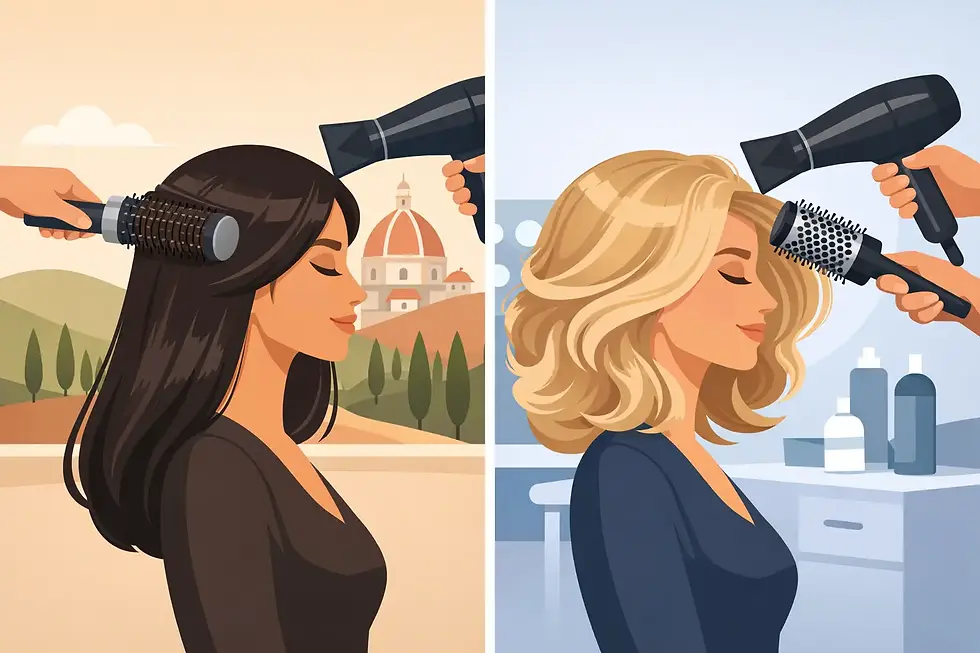
This is especially effective when paired with an Italian-style blow-dry. A controlled bend through the front sections adds fluidity and shine, helping the face appear softer from every angle. The finish matters almost as much as the cut.
The most flattering layer placements
Cheekbone-skimming layers can be beautiful when the goal is to draw attention upwards. They highlight the eyes and lift the whole face. For some women, this is the most elegant route to softness because it shifts focus away from the lower face entirely.
Below-the-chin layers are often safer if the jawline is broad or pronounced. They break up the outline without adding width. This placement tends to suit women who want polish with a touch of movement rather than obvious volume.
Longer face-framing from the lips down to the collarbone can be incredibly chic on thick hair. It allows the front to flow inwards and soften the jaw while keeping the overall shape strong and glamorous.
Fringe or no fringe?
A fringe can absolutely help soften the face, but it depends on the kind of fringe. A heavy, straight-across fringe combined with a blunt jaw-length cut can create a boxier feel. A softer curtain fringe or a longer sweeping fringe usually works better.
Curtain fringes are particularly effective because they open the centre of the face and create diagonal movement. That diagonal line is helpful on stronger features. It introduces softness without making the haircut feel too styled or too youthful.
A side-swept fringe can also be excellent if you prefer classic glamour. It breaks symmetry, softens the forehead and blends naturally into face-framing layers. For many women, this is one of the easiest ways to make the whole cut feel more forgiving.
Hair texture changes everything
The best haircut for softer jawline shape on straight hair is not always the best option for wavy, curly or coarse hair. Texture affects volume, width and where softness naturally appears.
On straight hair, the cut has to work harder because every line is visible. Precision matters. Even a slight over-thickening at the jaw can become obvious. Soft graduation, internal layering and carefully placed front pieces are often the difference between chic and severe.
On wavy hair, softness often comes more naturally, but shape control is essential. Too much width through the sides can make the lower face look broader. The cut should encourage movement without building volume exactly where you do not want it.
On curly or very textured hair, the answer is not simply removing bulk. Over-layering can create a triangular effect, which can widen the lower face. A better approach is sculpted shaping that keeps lift in the right places and allows curls to frame the face with intention.
Styling choices that help soften the jawline
Even the most beautifully cut hair can look wrong if it is styled in a way that hardens the face. Pin-straight ends tucked sharply behind the ears tend to expose every angle. That can be powerful, but it is not usually the softest look.
A smoother, more fluid finish is more flattering. Soft bends, polished volume and movement through the front all help to blur the jawline visually. This is why a professional blow-dry can completely change how a haircut feels. The shape comes alive.
Parting also matters. A severe middle part can work on some face shapes, but on others it makes the lower face look more pronounced. A soft off-centre or side part often introduces enough asymmetry to flatter instantly.
What to ask for in the salon
If you want a haircut for softer jawline enhancement, avoid vague wording. Ask for face-framing that starts in the most flattering place for your features, softness around the front, and a shape that does not build width at the jaw.
It also helps to talk about your styling habits. If you wear your hair naturally textured, the cut should be designed for that. If you rely on a polished blow-dry, the shape can be tailored to hold that glamour. A premium haircut should fit your life, not just the mirror on the day.
At Massimo Giglio, that personalised approach is where the result becomes genuinely transformative. The haircut is not chosen from a trend cycle. It is built around the woman wearing it.
The cuts to approach with caution
Jaw-length one-length bobs, thick square fringes and heavy outward volume at the sides can all make a jawline appear stronger. That does not mean they are off limits. It means they require confidence and the right face balance to carry them.
Equally, very long hair with no shape at all is not always softening. If the front is flat and lifeless, the jaw can still dominate. Length alone is not the answer. Shape is.
The most flattering haircuts usually sit in that refined middle ground - structured enough to feel luxurious, soft enough to move, and tailored enough to enhance rather than overpower.
Beauty is not about erasing strength from the face. Often, the most sophisticated result comes from softening just enough to create balance. The right haircut lets your features feel polished, feminine and unmistakably your own.


Comments