


How to Blow Dry for a Polished Finish
- maxgiglio
- Jun 15
- 6 min read
A polished blow-dry is never just about drying hair. It is about control, shape and the kind of finish that changes how your cut sits around the face. When clients ask for a blow dry for polished finish, they are usually asking for something more specific than volume or smoothness alone. They want hair that looks expensive, intentional and beautifully put together from every angle.
That result starts long before the final pass of the brush. It begins with the haircut, the preparation and the judgement to know when hair needs softness, when it needs tension and when it needs restraint. A polished finish should not look stiff or overworked. It should move, catch the light and still feel like you.
What makes a blow dry for polished finish look luxurious
The difference between an ordinary blow-dry and a truly polished one is refinement. Refinement in the root direction. Refinement in the bend through the mid-lengths. Refinement in how the ends are dressed so they look glossy rather than fluffy.
A luxury finish is not always the biggest or the straightest. On finer hair, too much round-brush work can make the style collapse quickly. On thicker hair, too much heat without enough section control can leave the outer layer shiny but the inside still bulky. Polished hair needs balance. It should feel smooth at the cuticle, but not flat. It should have shape, but not a helmet effect.
Face framing matters as well. The front sections are where a blow-dry either elevates the whole look or lets it down. The right movement around the cheekbones, jawline and collarbone softens features and brings elegance to the style. This is where expert layering and styling work together. A good blow-dry can enhance a haircut. A great one reveals it.
Preparation is where polished hair begins
If the prep is wrong, the finish rarely recovers. Hair should be cleansed well enough to feel fresh and light, but not stripped. Product choice matters here. A rich mask may sound indulgent, but on certain hair types it can reduce lift and make roots separate too quickly. On the other hand, dry or colour-treated hair without enough conditioning often frizzes as soon as the brush goes in.
Towel drying is equally important. Hair should be gently pressed, not roughed up. Friction at this stage creates unnecessary texture, and that texture is what many people then spend too long trying to smooth away with heat.
Product layering needs a measured hand. Heat protection is non-negotiable, but polished does not mean overloaded. A smoothing cream through the lengths, perhaps a root product where lift is needed, and a lightweight glossing product for the ends can be enough. The exact formula depends on density, texture and the result you want. Sleek city hair, soft occasion glamour and a fuller Italian-style finish do not need the same product wardrobe.
Sectioning and tension change everything
This is the part most people rush, and it shows. Clean sections create clean results. If the sections are too large, the airflow does not reach evenly and the brush cannot set the shape properly. The hair may look acceptable for ten minutes, then start to swell or lose form.
Smaller, disciplined sections allow the hair to be directed with precision. Root control comes first. If the root is still damp or poorly directed, the style will never look fully polished. Once that foundation is in place, the mid-lengths and ends can be refined without fighting the shape.
Tension is where skill becomes visible. Too little tension leaves the cuticle rough. Too much can flatten the life out of the style or make the ends look harsh. The best blow-dries use enough tension to smooth and sculpt, while still keeping body where it flatters the face.
Why brush choice matters in a blow dry for polished finish
The brush should suit the hair, not the trend. A larger round brush can create elegant bend and a smoother finish on longer lengths, but it may overwhelm shorter layers or fine hair. A medium ceramic brush can offer more control, especially around the front and crown. Paddle brushes can be ideal for sleek, straighter finishes, particularly when the goal is polished and modern rather than overtly bouncy.
Natural bristle can help distribute shine beautifully, while mixed bristles often grip better on denser hair. There is no single best option. There is only the right tool for the hair in front of you.
Heat, airflow and timing
Many disappointing blow-dries are not ruined by a lack of effort, but by poor timing. Hair needs to be around eighty per cent dry before detailed brush work begins. Start too early and you stretch and overheat the hair before it is ready. Start too late and you lose the chance to direct the roots properly.
The nozzle should always be used. Air needs to travel down the hair shaft to support shine and reduce disruption to the cuticle. Random airflow creates expansion, not polish.
Heat also needs judgement. Coarse or resistant hair may need more heat and firmer control. Fine, delicate or pre-lightened hair needs a more careful approach. If the hair feels too hot to the touch, you are likely pushing too far. A polished finish should look healthy, not just controlled.
Then comes the part people skip - cooling. Each section needs a moment to settle into shape. This is what gives a blow-dry memory. Without it, the style can fall quickly, especially in London humidity or after a fast journey across the city.
The polished finish is in the details
Anyone can make hair look smoother for a moment. Polished hair is different. It has finish at the hairline, finish at the parting and finish at the ends.
The hairline deserves special attention because it is often finer, more fragile and more reactive to moisture. If this area is not fully refined, the whole style can read unfinished even when the rest looks glossy. The crown needs a clean direction too. This is where expensive-looking hair gets its confidence.
Ends should never look thirsty or bluntly forced into shape. Depending on the cut, they may need a soft bevel, a subtle kick, or a smoother tucked-under line. The goal is not to make every style look identical. It is to make the finish look deliberate.
A light finishing product can help, but restraint matters. Too much serum separates the hair. Too much hairspray removes softness. The best final touch is often minimal - enough to reflect light and hold shape, not enough to announce itself.
When polished does not mean flat
Some clients hear polished and worry the hair will lose glamour. It should not. In fact, the most flattering polished styles often include movement. Soft lift at the crown, controlled volume through the sides and a face-framing bend can look far more luxurious than very flat hair.
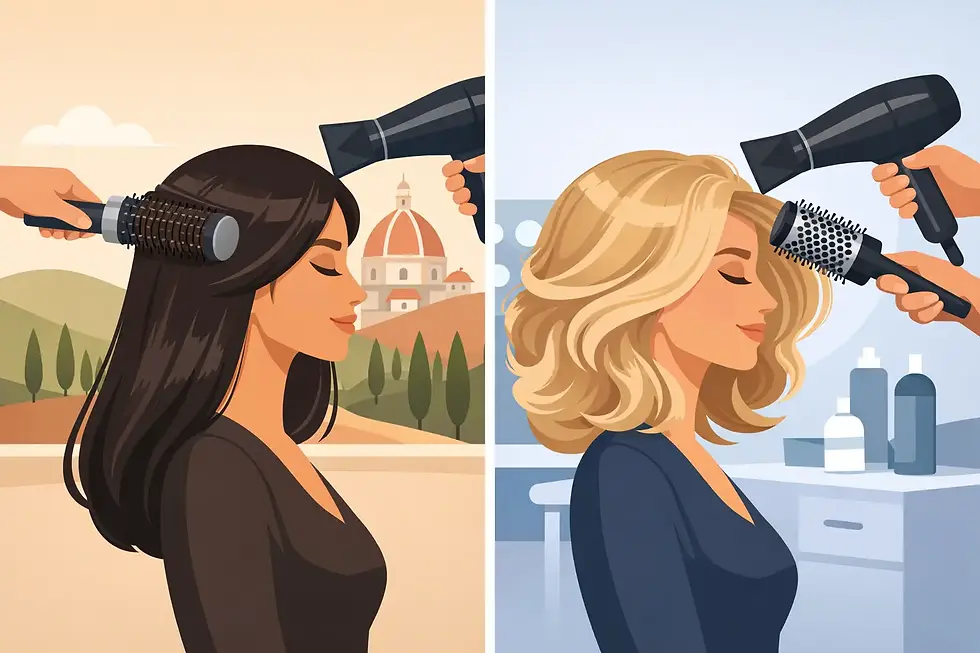
This is where Italian styling influence has real elegance. The finish is refined, but it still has presence. Hair should look touched by expert hands, not pressed into submission. At Massimo Giglio, that balance between glamour and precision is exactly what makes the result feel modern.
Common reasons a blow-dry loses its finish too quickly
Sometimes the issue is technique. Sometimes it is expectation. Very thick hair on a damp day will not behave the same way as naturally smooth, fine hair in perfect conditions. That does not mean the blow-dry has failed. It means the method and finish need to suit real life.
A style usually drops too quickly because the roots were not fully dry, the sections were too large, the products were too heavy, or the finish was not set properly as it cooled. In other cases, the haircut itself may be fighting the style. Overgrown layers, bulky corners or poorly balanced lengths can make a polished result much harder to achieve.
That is why haircutting and styling should never be treated as separate conversations. The best blow-dry sits on a shape that has been designed to move beautifully.
How to ask for the right polished result in the salon
If you want a more elevated finish, be specific about the image you have in mind. Polished can mean sleek and glossy, softly curved and face-framing, or full and glamorous with controlled bounce. These are all polished, but they are not the same.
It helps to mention how you wear your hair most often, how much movement you like around the face, and whether you need the style to last through a long workday, an evening event or a wedding schedule. A good stylist will translate that into technique - from the prep and sectioning to the brush size and final dressing.
The real luxury is not simply leaving with smooth hair. It is leaving with hair that has been shaped for your features, your texture and your life. That is what gives a blow-dry presence.
A polished finish should feel effortless when you wear it, even though it is anything but accidental. When technique, cut and styling judgement align, the result is quiet confidence in hair form - glossy, flattering and unmistakably well done.


Comments